11.13.2014

The most dangerous rare plants in the world

Over millions of years, plants have developed some crafty ways to fend off hungry animals. Deadly neurotoxins, thorns capable of puncturing car tires, and powerful digestive enzymes are just a few. Following the recent discovery of Nepenthes attenboroughii, a giant pitcher plant large enough to digest rodents, PM tracked down poison-plant aficionado Amy Stewart to discuss some of the world's deadliest plants. Stewart, who is the author of Wicked Plants: A Book of Botanical Atrocities, lives in Eureka, where she tends a garden that contains more than 30 different species of poisonous plants.


Discovered more than 5000 feet above sea level on Mount Victoria in the Philippines, the giant, carnivorous pitcher plant secretes a nectar-like substance to lure unsuspecting prey into a pool of enzymes and acid. A series of sticky, downward ribs makes it nearly impossible for trapped prey to escape. The plant's 30-centimeter diameter is large enough to trap unlucky rodents, but insects are its most common meal. Pitcher plants, of which there are about 600 different species, tend to grow in nitrogen-deficient environments, and therefore get their nutrients from decaying victims. 

 2. Most likely to be in your garden now

Castor Bean Plant: Ricinus communis


Castor-bean plants can be purchased at just about any garden center, despite containing the deadly poison ricin. Amy Stewart, author of Wicked Plants and poisonous plant expert, has an affinity for the plant and grows several in her poison garden. Concerned gardeners can simply pluck the seeds off the plant, Stewart says, which is where the ricin is stored. Though the process to extract enough ricin and process it into a weapon is complex, Las Vegas authorities have discovered the toxin in a hotel room in February 2008, and the KGB used it to permanently silence opposition. 


3. Most violently toxic plant in North America

Western Water Hemlock: Cicuta douglasii


Deemed the most "violently toxic plant that grows in North America" by the USDA, the water hemlock contains the toxin cicutoxin, which wreaks havoc on the central nervous system, causing grand mal seizures--which include loss of consciousness and violent muscle contractions--and eventually death, if ingested. Water hemlock is different from poison hemlock, Socrates' notorious killer, in that it contains coniine alkaloids that kill by paralyzing the respiratory system. Both are members of the carrot family. 

4. The plant that killed a president's mother

White snakeroot: Eupatorium rugosum


Drinking milk from a cow that decided to chow down on white snakeroot could lead to deadly milk sickness, as was the case with Abraham Lincoln's mother Nancy Hanks. Every part of this perennial plant contains tremetol, an unsaturated alcohol that can cause muscle tremors in livestock before killing them. "People were trying desperately throughout the 19th century to figure out what was poisoning their animals," Stewart says. It wasn't understood until the turn of the century, when the U.S. Department of Agriculture pinpointed the cause and quickly got the word out. Now, white snakeroot still grows wild, but more control in the agricultural industry has helped to prevent cows from eating it. 

5.The best plant to murder a dinner guest with

Monkshood: Aconitum napellus


Stewart was once asked what the best plant would be to murder a dinner guest with--after much deliberation she landed on monkshood. "You could just chop up the roots and make a stew," she says. "You don't need a chemistry plant to do it." The vibrant purple plant, commonly found in backyard gardens, is loaded with the poisonous alkaloid aconite, which tends to cause asphyxiation. While Stewart is certainly joking about cooking up a batch of monkshood stew, she urges anyone who has the plant in their garden to wear gloves when handling it. 


This aquatic meat eater relies on several submerged bladders to capture prey such as tadpoles and small crustaceans. An unsuspecting passerby will brush against an external bristle-trigger, causing the bladders to spring open and capture it. Once inside, the victim dies of suffocation or starvation and then decays into a liquid that is sucked up by cells on the walls of the bladder. 


With the ability to clamp shut in a half-second, the Venus flytrap's reaction time seems fit for the animal kingdom. Insects need to touch two of the flytrap's hairs consecutively in order for the plant to react, but the precise mechanism that shuts the trap remains unclear. The Botanical Society of America notes that early theories suggested that a sudden change in the water pressure of cells triggered the response, but this theory has since been abandoned. It now seems that when the plant is touched, the electrical potential of the leaf is altered, triggering a host of cellular-level events. 

8. The most enticing poison

Oleander: Nerium oleander


This extremely common evergreen shrub is one of the most poisonous plants in the world. "If I were a parent and covering every electrical outlet in the home to protect the kids, I would really have to ask myself why I had an oleander plant growing," Stewart says. The leaves, flowers and fruit contain cardiac glycosides, which have therapeutic applications but are likely to send someone into cardiac arrest should he eat part of the plant. Stewart points out that there is a woman in California currently on death row for trying to poison her husband with the plant, and two young boys were found dead after ingesting oleander a few years back. "People tend to be blasé, because the flowers are bright and pretty, sort of candy-colored. But it is a very poisonous plant that will stop your heart." 

9. Best home-security system

Mala Mujer: Cnidoscolus angustidens


Mala mujer, which translates to "bad woman," can be found in parts of the southwest and Mexico and is covered with nasty thorns, which could be turned into makeshift barbwire if needed. The real danger, however, comes from the caustic, milky sap that can leak from the plant. The sap, a common feature among many plants in the Euphorbia genus, can cause painful skin irritations and unsightly discoloration. "I've had several people tell me they had euphorbia saps in their eyes," Stewart says. "And they had pretty surprisingly long-term eye damage."


11.12.2014

Ten weird and truly terrifying rare plants

1. Red Tide Algae


The Red Tide is a terrifying phenomenon that haunts the Earth’s coastlines. At certain times of year, the waters may turn a rust color as thousands of tiny seaweeds known as (Algera pelagius) multiply after mysterious influxes of nutrients, often in combination with temperature changes. The algae is rapidly absorbed by shellfish, and is extremely neurotoxic. The highly lethal bloom may rapidly paralysis limbs, and even worse, it anesthetizes the respiratory pathways upon exposure through contaminated shellfish. The Red Tide is considered to be the basis of the Biblical Plague where the waters turned to blood, and was noted to have caused the death of one of Captain George Vancouver’s crew upon the navigation of Western Canada. States and provinces have been closed to harvesting as a result of “paralytic shellfish poisoning” threats. In addition to human victims, entire beaches have been covered dead seabirds and ducks that were exposed to the toxic algae. Red Tide just might explain some of the mysterious animal deaths noted on a recent list.

2. Spurge Laurel


While Giant Hogweed scares with its alien appearance, we look at an unassuming plant with small, glossy leaves that may be commonly found in ornamental gardens and public grounds. Spurge Laurel is closely related to the Bay Leaf, but this woody mini-shrub offers one of the dreadful deaths in the Plant Kingdom. Containing powerful biocides, Spurge Laurel will cause blistering and irritation if cut or handled carelessly, but it is internally that it wreaks its havoc. Consumption of even a couple berries will result in major internal bleeding and organ failure, with death imminent within several hours. Interestingly, some tribes have used Spurge Laurel as a drug of last resort for seriously infected patients, but the cure may be worse than the disease. Wild Greenfinches can eat it without suffering any harm.

3. New Zealand Tree Nettle


The New Zealand Tree Nettle is one of only two plants in the world that has killed a human just by the unfortunate act of walking into it. The monster plant is an enormous and super toxic tree version of the common stinging nettle, and may grow up to 15 feet tall. The well camouflaged plant is armed with unusually large needles that deliver a potentially lethal and also corrosive neurotoxin upon the slightest contact. Great caution when hiking is critical to preventing deaths. In one tragic documented case, a New Zealand Hunter was killed after brushing one of these terror nettles, causing nervous system shutdown through the acute venom effects. If death does not occur right away, potentially deadly polyneuropathy, a degenerative breakdown of nervous system pathways may occur over time.

4. Gympie-Gympie


The Australian Gympie-Gympie tree distinguishes itself as the world’s most dangerous tree, and the most painful of all stinging plants trees. The Gympie-Gympie’s excruciating pain has been described as being sprayed with hot acid, and has driven those affected to suicide. In one disturbing case, a man shot himself after mistakenly using the leaf as toilet paper in the bush. The terrifying tree contains one of the most persistent toxins known to man, and burning sensations may continue up to two years after being stung. This may be due to poison retention inside the venomous needles injected upon contact. One researcher discovered that the poison remains viable for up to 20 years. Anaphylactic shock may be induced in even healthy persons, leading Australian forestry departments to issue hazmat grade suits to bush workers in affected areas.

5. Himalayan Blackberry


Himalayan Blackberry is one plant you don’t want to tangle with—literally. A briar on steroids, one plant can cover half an acre with treacherous slashers. Unlike normal blackberries, each stalk measures up to 2 inches across, and is covered with inch long thorns that extend like sharks teeth. While brambles might give you a scratch, an encounter with Himalayan Blackberries may warrant a visit to the emergency room. Slashes from even casual stumbles into the innocent looking plants may result in serious eye injuries and blood loss from damaged veins and arteries. Many accidents result when hikers trip in a gully infested with the hazardous spikes. Extreme protective wear including shatter proof safety goggles are favored by hazard management crews. The spiked canes are placed under tension as they tangle together, and upon disturbance, may fly back, acting as a mace capable of slashing eyes.

6. Angel Trumpet


The spectacular Angel Trumpet vine is native to the forests of South America, and delivers a dark triad of potent toxins—atropine, hyoscyamine, and the mind altering scopolamine. Unlike the other plants on this list, Angel Trumpet is less dangerous in of itself, than as a biological weapon in the hands of humans. In 2007, Angel Trumpet was featured in the documentary “Colombian Devil’s Breath,” for its use by criminal gang members who refined scopolamine from the ethereal looking weed and used it to turn victims into zombies – literally. This “hypnotizing herb” leaves its victims unaware of the nature of their actions, but still completely conscious. The documentary contained numerous horror stories of scopolamine attacks, including one eerie case where a man had scopolamine powder thrown in his face, and promptly emptied his entire apartment into the van of the robbers. Voluntary experimenters have seriously injured themselves in their psychotic state.

7. Death Camas


In the shire like Oak woodlands of Western North America, edible bulbs known as Camas plants dot the meadows with their bright flowers. First Nations actively cultivated the fields through scheduled burning, producing the potato-like food as a principle source of starch. However, a closely related species exists that looks similar to edible Camas. With a name like Toxicoscordion venenosum, it is immediately clear that this is one of the most toxic plants in existence. The Death Camas from edible camas can be distinguished by its moderately different coloration, and distinction is a matter of survival should one be persuaded to try Camas. Ingestion in anything but the smallest amounts results in rapid deaththrough organ failure and blood disturbance. We can only imagine how the Death Camas was discovered.

8. Giant Hogweed


Giant Hogweed is truly the plant of nightmares. While many plants are toxic by ingestion, Giant Hogweed causes horrendous damage to humans just by mere skin contact. Looking like an emergence from an alien planet, the Giant Hogweed can only destroy a human through cooperation with an extra-terrestrial body—our Sun. Giant Hogweed is photosensitive, and oozes a thick sap that coats human skin upon contact. Almost immediately, the sap reacts with the sun and starts a chemical reaction that burns through the skin and tissues, leading to necrosis and the formation of massive, purple lesions that incredibly, may last for several years. Even more terrifying is the potential of a minute amount of sap to cause permanent blindness upon eye contact. Giant Hogweed plants grow up to 8 feet tall, and have become a priority emergency target for noxious plant control departments. Pigs, however, are immune.

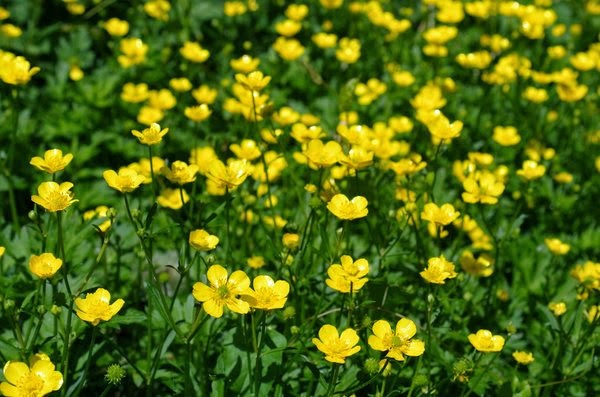
9. Buttercup


Buttercup is by far the most innocent looking plant on this list. It is also one of the most ubiquitous, and among the more deadly garden plants. Buttercup commonly grows in grassy patches with poor drainage, and may frequently be found by children who use it in games that involve touching it to the skin. The goal is to experience a momentary red mark on the skin, as the brilliant yellow flowers release a toxin induces temporary rash symptoms. Buttercup is far more dangerous, however. The plant is capable of poisoning grazing animals that eat it, causing serious gastrointestinal toxicity. Ingestion by humans may result in a painful death resulting from organ and nervous system intoxication. Beauty is clearly in the eye of the beholder, not the handler of this killer flower.

10. Skunk Cabbage


Skunk Cabbage is a huge, foul smelling North American member of the Aurum family. Native to swamps, the odor of the plant is often mistaken for an irate skunk until the huge golden or purplish flowers are seen emerging from the leaves. The appearance of the plant is like an alien artifact. Although certain parts of the Skunk Cabbage were found to be edible by Native Americans, it should be known that death from severe calcium oxalate poisoning may result from consuming the wrong parts in excessive quantities. The calcium oxalate is an extremely corrosive toxin that burns into the flesh, and may shut down organ systems. The author misunderstood a gardening book and tried a flowerhead. The result was extreme burning of the mouth and throat, serious illness for several hours, and two days of difficult swallowing.

11.08.2014

Beautiful rare plants included in the Red book

Lilium martogon

(Лилия кудреватая)
Lilium martogon is a graceful flower that considered to be extremely rare in many areas of the country and should be protected.
This perennial herb belongs to the family Liliaceae.
At the height of Lilium martagon can reach half metres.In June-July on a lily blossom pink flowers gathered in racemes. Lily stamens have violet anthers.This flower prefers rich, moist soil. It grows in deciduous, coniferous and mixed forests, found on the slopes.

(Венерин башмачок)

Cypripedium calceolus is a beautiful flower orchid family. These original and rare flowers and its nicknames have no less interesting - "lady's slipper", "shoes of Venus", "ladies shoes", "flowers-moccasins", "young lady in a hat", "zozulka" and, oddly enough, "Adam head. "The names of these are associated with unusual shape of the flower - one of the petals has a shape shoes.
Many varieties of this type of artificial bloom for a long time, which is typical for all orchids - flowers are kept for several weeks and even months.Lady's Slipper is able to bloom in different seasons, often - 2 times a year. Caring for these flowers, you need to maintain high humidity and semidarkness, regularly but moderately make watering.  Transplant the plant suffers not too good, though it is quite possible. It is possible to produce a division for reproduction.Despite the rarity, lady's slipper, with a large share of good luck, can be found throughout Europe - including in Russia. 


Convallaria majalis L.

(ландыш майский)
Сonvallaria majalis L. is a real miracle of nature gentle and charming. This is an amazing flower, belonging to the family Liliaceae, blooms in May and June, preferring shady deciduous forests. Lily of the valley reaches a height of 15-25 cm. In the arcuate stem swaying brush bowed pearly white  flowers, shaded basal elliptical leaves. Once the flowers are pollinated, lily of the valley formed round green berries that turn red with time gradually. Lily of the valley is poisonous, but it is widely used in the manufacture of medicaments for the treatment of cardiac diseases. Used this amazing flower for healing eye diseases, nerve and heart disease, in folk medicine. In our time, Lily of the valley no less precious than those same pearls of legends, that's why he is listed as endangered and protected by law.


 Nymphaea candida
(белая кувшинка)
White water lily, Nymphaea is a perennial herbaceous plant belonging to the family Nymphaeaceae. It can be seen on the muddy peat bogs or on the surface of stagnant lakes, rivers with slow current.It has got its name because of the shape of a flower fruits similar to pitcher.Waterlily flower has long been considered the nymphs.Nowadays, white water lily is considered a rare species, it is listed as endangered, and only depends on us to overcoming-grass finally become a tall tale folk.


(прострел раскрытый)
Pulsatilla patens L.is a surprisingly delicate flower, a kind of symbol of spring and purity. This is a perennial herb that belongs to the buttercup family and grows in the sub-continental climate. The Latin name of the flower from the word «pulsare», which means "to move, set in motion." This is due to the full capacity of flower petals and fluffy lint respond to the slightest breath of wind. Favorite habitat - lumbago - pine forests. Here, on a bed of pine needles, and blooms in April and May, these listed in the Red Book of the flowers.Pulsatilla patens is not only beautiful. He also refers to the number of medicinal plants has a strong bactericidal and fungicidal properties (kills fungi). Another important quality of this flower has earned him a fabulous popularly known as "sleep-grass." Nowadays Pulsatilla patens belongs to the most popular spring flowers - delicate purple flower buds, pubescent touching fibers, perfect in its artlessness. They thus decided to give friends and loved ones. But, unfortunately, often become the victim of backache "flower poachers", which causes serious damage to the populations of these beautiful flowers. 

Nelumbo nucifera

(лотос орехоносный)
Nelumbo nucifera is also called Indian belongs to the family of the lotus. It is considered a relic of the Tertiary flora, entered in the Red Book and is under state protection. This amphibian herbaceous perennial that although prefers to grow in flowing water of rivers and lakes, in cozy bays, bad moves and lives on land - when the groundwater level is lowered.Sacred Lotus has long massive rhizome hiding under water, and leaves long-petiolate (lying on the surface of the water), and scale-like (under water). Lush pink (or white) flowers reach a diameter of 20-30 cm. In the center is a receptacle and a group of yellow stamens. In the fruit ripens receptacle - nut. Precisely because of this nut to crack Sacred Lotus got its name.
(бересклет карликовый)
Euonymus nana is a showy evergreen shrub belonging to the family Celastraceae. Deemed view endangered and protected by the state. Included in the Red Book. Euonymus justifies its name - its height, usually less than 50 cm, for good reason - this shrub belongs to the creeping species. It has lots of easily rooted stems that give the ascending shoots.Nowadays dwarf euonymus willingly used by specialists in landscape and park design - it is an excellent material for creating borders and clumps.
(женьшень настоящий)
Panax ginseng is a true miracle of nature, plant, which in many nations of the world is considered to be the cure for all diseases. Latin name of ginseng itself translates as "panacea". Panax ginseng belongs to the family Araliaceae. On the stem, which has a height of 30-60 cm, grow  leaves whose shape echoes the shape of a maple leaf. Umbrellas flowers are inconspicuous, but the red berries are evident on a background of green. The root of the same and the main value of ginseng  reaches a length of 12 cm. Panax ginseng grows in mountain pine and mixed forests. It is believed that this plant has absorbed the power of natural energy. And the origin of ginseng is associated with the intervention of a higher power. In China assured: lightning, which is sent to the earth gods, bears a true blessing or punishment. If lightning hits the source, who goes under the earth, and in its place grows ginseng, which has a vital force, God blessed touch. No wonder the second name of ginseng - "the root of life."


(Эдельвейс)
Leontopodium sp. is a rare species protected as the legendary flower lovers. It belongs to the family Asteraceae. At the height of this plant reaches 10-15 cm. Graceful stems crowned proud, reminiscent of the stars, flowers - inflorescence basket framed horizontal pubescent bracts that look like stars.In June and July on the slopes, at an altitude of about 1800 m, these beautiful flowers bloom, which for scarce vegetation seem just a whim wizard, at the whim of their planted there is fluffy miracle of nature. In fact, everything is much easier - Edelweiss prefer to grow in soils rich in limestone and shale.

Why have we created this blog?

This blog is intended for such serious problem as an endangered species of plants.


Aimes of the study :


1. Find out the concrete reasons for the disappearance of plants.


2 . Learn how a person participates in the saving of rare plants.


3 . Learn independently to acquire knowledge .


Tasks of the research :


1. Describe the reasons of the disappearance of rare plants.


2 . Encourage people to protect and rescue wildlife.


Hypothesis of the study :


1. Perhaps people are culprits of such problems .


2 . Suppose, there is the other reason for the disappearance of plants - ecology.


Method of the research :

1. To use the source of information- the internet

2. To conduct a survey among young people and adults